
Why Savvy E-Commerce Shops Prioritize Google Merchant for Conversions
Learn how stronger site performance can improve Google Merchant product visibility and support more consistent e-commerce conversions.


As an e-commerce shop, you can invest heavily in paid traffic and still miss visibility in one of the most active product discovery spaces online: Google Shopping results. Unfortunately, that missed visibility can affect conversions before someone ever arrives on your website.
Search behavior has changed quite a bit over the last several years. Shoppers compare products directly inside Google. They scan pricing, reviews, shipping details, and availability before deciding where to click. In most cases, the decision begins directly on the search results page.
This shift has changed how e-commerce brands compete online.
Your website still plays a major role in the buying experience, though product exposure now starts earlier in the process. Google Merchant Center helps connect your catalog to high-intent search experiences so your products appear where shoppers initially compare options.
But showing up in Google Shopping isn’t a given; it hinges on the underlying health of your site. Product feeds, technical SEO, site performance, and inventory structure all affect the way your products appear in Google.
In this article, we’ll look at how Google Merchant supports conversions and why product visibility often depends on the technical systems supporting your site.
How Does Google Merchant Work?
Google Merchant Center connects your e-commerce catalog to Google. It’s a centralized hub that promotes your products across:
- Google Shopping
- Organic product listings
- Product-rich search results
- Image search
- Local inventory experiences
Google Shopping is what shoppers interact with on the front end, while Google Merchant Center is the tool businesses use to manage product data behind those listings.

Once a Google Merchant Center account is connected to an e-commerce platform, the product feed helps Google understand inventory. Product titles, descriptions, pricing, photos, and availability all influence how your listings appear in search.
You can see how this might play out in everyday shopping behavior. For example, someone searching for a home office chair may compare several options in Google Shopping before ever visiting a specific retail website. Things like product images, ratings, pricing, and shipping details can all help to shape an early purchase decision.
Without an optimized Google Merchant Center account, your products have fewer opportunities to appear in search results (like in the home office chair example).
Why Product Discovery Starts in Search

Traditional e-commerce strategy focused on driving traffic to product pages. But now? Shopping behavior creates a layer of competition before that visit ever happens.
Google Search now acts more like a true shopping experience than a list of links. Someone can compare options before they ever click into a product page (even on mobile).
Your website experience still influences whether a customer completes a purchase. But if your product never shows up in search results to begin with, does the website even get the chance to do its job?
Showing up early in the search process matters even more when you’re competing with large marketplaces. Google Merchant gives smaller e-commerce brands opportunities to appear in search results when shoppers are on the verge of making a purchase. Early visibility matters when 31.5% of shoppers start their purchase journey on Google Shopping, which now sees over 1.2 billion searches every month.
How Does Site Performance Affect Google Merchant Results?
Google Merchant actually works more closely with your website’s technical health than you might think.
Your product feed pulls directly from your site, so technical issues can affect how your products appear in Google. Inaccurate inventory, missing schema, or outdated product data can all limit visibility.
E-commerce performance challenges are often connected to the following:
- Incomplete product data
- Weak category structure
- Slow product pages
- Broken inventory syncing
- Missing structured data
Issues like these can reduce how often your products appear in search and may also trigger “product disapprovals” within Google Merchant Center. A product disapproval means Google has stopped showing a listing because something on the site doesn’t meet its requirements (i.e., pricing mismatches, missing information, or inaccurate availability).
Assuming a product does appear successfully in search, the site experience still plays a major role in whether someone follows through with a purchase. Confusing navigation or a clunky checkout process can quickly deter someone from buying.
Working with a site performance team helps keep the systems behind Google Merchant aligned over time. That usually includes
- Accurate product feed data
- Mobile-friendly page performance
- Inventory syncing between your site and Merchant Center
- Structured product data that Google can properly read
Google Merchant + Google Business Profile = Better Omnichannel Visibility

Google Business Profile (GBP) management also plays an important role in e-commerce visibility if your business has physical locations, showroom space, or local inventory.
Many shopping journeys now incorporate both online searches and local brick-and-mortar research. Someone might find a product in Google Shopping, check whether it’s available nearby, and stop into a physical retail location later that day. Other shoppers start with local research before ultimately deciding to order online.
Google Merchant and GBP help business owners more seamlessly connect those experiences.
For omnichannel e-commerce businesses offering local pickup or in-store shopping, these platforms can help products appear in places like
- Google Search
- Google Shopping
- Google Maps
- Local inventory listings
Once everything is connected properly, Merchant Center and Google Business continue supporting product discovery as your catalog, inventory, and reviews update over time.
There’s also a longer-term operational advantage here.
Similar to website automation workflows, Merchant Center and GBP run in the background once the infrastructure is properly connected. As your catalog updates and inventory changes, those systems support visibility across Google’s ecosystem. That ongoing visibility becomes particularly valuable for businesses balancing online sales with physical foot traffic.
Why Ongoing Optimization Matters for E-Commerce Brands
Google Merchant needs regular maintenance behind the scenes. As your site evolves, small technical issues can affect how your products appear in Google search results.
Regular maintenance work includes the following:
- Reviewing feed quality
- Improving product titles
- Maintaining structured data
- Monitoring mobile performance
- Resolving product disapprovals
- Assessing checkout/ conversion issues
Over time, these improvements help products surface more consistently while making the buying experience smoother for shoppers.
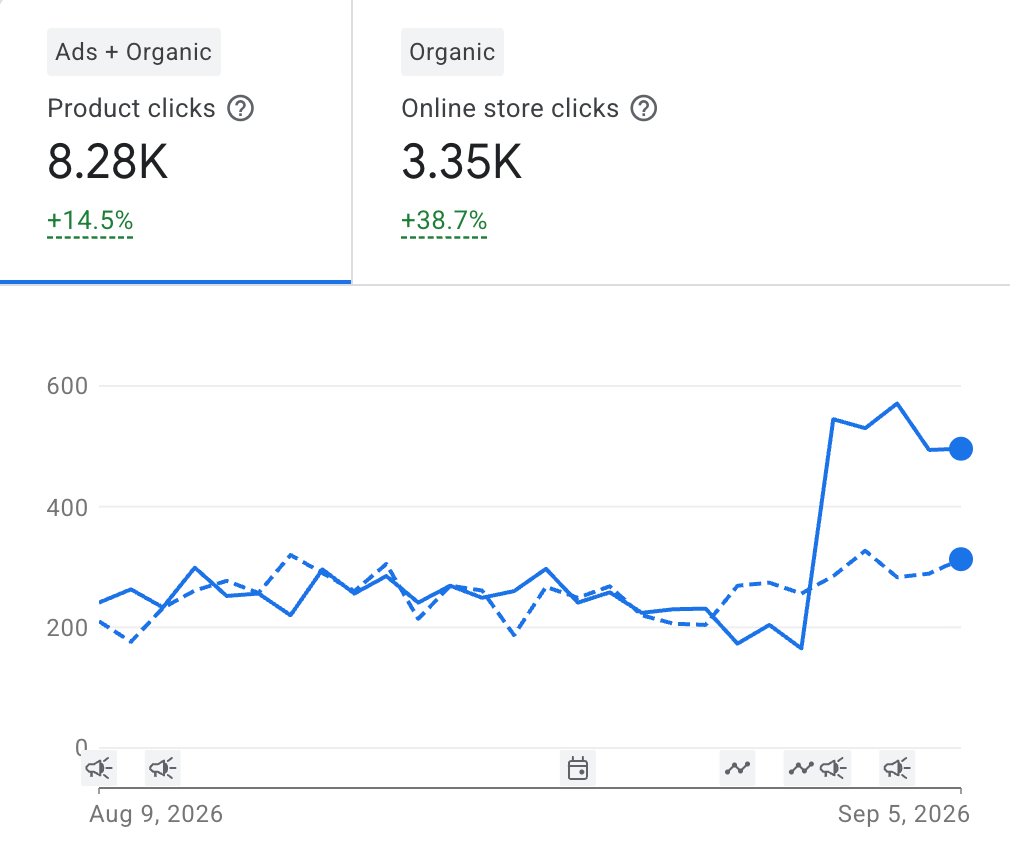
Ongoing product maintenance also gives e-commerce brands greater long-term flexibility. As your catalog grows or your site changes, the underlying structure is already rock solid to support future updates.
Does Your Site Infrastructure Support Product Visibility?
Google Merchant performs better when the underlying e-commerce site is technically sound. Seemingly small website issues behind the scenes can significantly affect how your products appear in search.
That’s why Merchant Center remains a pillar of any successful e-commerce site performance strategy. An optimized Merchant Center presence helps products appear more consistently across Google. But more than that, it positions your website to achieve stronger exposure and consistent conversions over time.
If your e-commerce store is investing in traffic but missing opportunities in Google Shopping and search, it may be worth taking a closer look at the systems supporting your catalog.
At Chek Creative, we work with e-commerce businesses to improve product exposure in search and strengthen the technical systems supporting their sites over time. If you’re looking for a clearer view of your e-commerce performance in Google Merchant Center, reach out to our team to start the conversation!