Websites & Apps
Software for the work your business actually does.
When a spreadsheet, a form and three tools stop being enough, we build the thing that replaces them.
We build custom web applications: software with its own users, records and permissions, where the data lives in the thing we built instead of scattered across tools you already pay for. If the data belongs somewhere else and you only need to see it, that’s a dashboard. Different job, different page.
The first release is the smallest version that solves the real problem. Then it keeps going. The Exterior Living Company’s production platform started as task tracking; it now runs purchase orders, scheduling and a deck builder.
We build on Next.js, Postgres and Cloudflare. We also take over software someone else started, including software largely written by AI that has become risky to change.
How we build
Shipped in pieces, measured, then extended.
We do not disappear for three months and return with a reveal. Work goes live in increments you can see and judge.

Architecture first
We agree the data model before anything is designed: what the records are, how they relate, and who is allowed to see them. Those are the decisions that are expensive to reverse later.

Built in increments
You have something to click on in about two weeks, and working software on a rhythm you can plan around after that. As the build reveals what the job actually is, the scope moves with it.
Handed over properly
The repository, the documentation and the accounts are yours from the start instead of at the end. Nothing here depends on us being reachable.

Built to keep going
Launch is the halfway point. The first release is what tells you what the software should have been, and we keep building against that. The clients on this page are still shipping with us years later for exactly that reason.
Evidence in Action
-

153
Projects delivered end to end through the dashboard

-
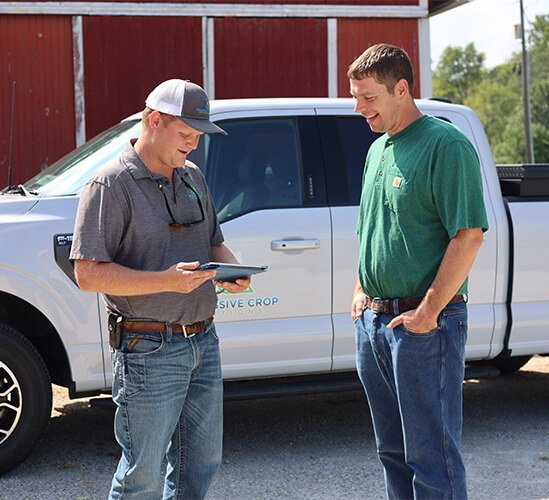
Next.js and Supabase platform for agronomy insights

-

90
Scheduled appointments in 8 days


Meet the Chek Digital Engine
The work does not stop at launch. Search, automation and the site itself compound each other instead of competing for the same budget.
Frequently asked questions
How much does a custom web app cost?
Less than a from-scratch build usually implies, because the first release is deliberately the smallest thing that solves the real problem. What decides the number is how many distinct things the software has to keep track of. One workflow with a few record types is the smallest version of this. Several workflows that all have to agree with each other is the largest. The first release gets scoped before we quote it rather than after, so what you get is a number for something specific — and if it is smaller than the work deserves we would rather say so than scope it down until it stops working.
How long until we have something we can use?
You will have something you can click on in about two weeks. When it is ready to rely on depends on how broad the requirements are. Honest answer, and the reason the first release’s scope gets agreed before we quote instead of after.
What happens after launch?
The build keeps going, and it should. Plan 15–25% of the build cost a year to keep the software worth using; that is the long-standing industry benchmark for software maintenance. Software that stops being invested in stops being used. The Exterior Living Company’s production platform started as task tracking and now runs purchase orders, scheduling and a deck builder, years later.
Isn’t this just a dashboard?
No. A dashboard shows you data that lives somewhere else. This is software that owns its own data: its own users, records and permissions, where the records exist because this application created them. If your numbers already live in tools you pay for and you need one screen to read them, that is internal dashboard development, and it is a different job.
Can’t we build this with AI or a no-code tool?
Often yes, for a first version, and that is a genuinely good way to find out whether the idea is right before paying anyone. The problems start later, when the thing works but nobody can safely change it. Small edits break something unrelated. Releases start to feel risky. Usually that is a sign the architecture was never defined, and not that the tool was bad.
We already have software that’s hard to change. Can you take it over?
Yes, and it is a large part of what we do. It starts with a code audit: what the system actually does, where the architecture was never defined, and what it would cost to make it safe to change again. You get that as a written assessment and you keep it whether or not you continue with us. It applies equally to software a previous agency built and to software largely written by AI.
What do you build on?
Next.js, Postgres and Cloudflare. A boundary, not a shortlist. We run these every day across every client, which is what makes it possible to quote a first release at this range and support it for years afterwards. If what you have is built on a stack we do not run, you will hear that on the first call instead of three weeks in.
Can you build something that has to be HIPAA or PCI compliant?
Yes, but it is a different engagement and the range above does not apply. Compliance brings audit, documentation and infrastructure obligations that sit outside a first release, so tell us early if that is your situation. It changes the shape of the project instead of adding a line to it.
Who owns the code?
You do. The repository is yours from the first commit, along with the documentation and the accounts it runs in. Nobody here is holding your codebase as leverage.
Related reading




Let’s build your engine
Tell us what growth looks like for your business